

Match the professional to the evidence: ventilation contractor for persistent high humidity or poor exhaust, window service provider for sash or sealed-unit defects, and building-envelope specialist for rough-opening leakage or hidden moisture.
Alongside the specific checks in Ice Buildup on Windows: Which Professional Should You Call?, review frost on inside of windows and compare that guidance with measured conditions in this home.

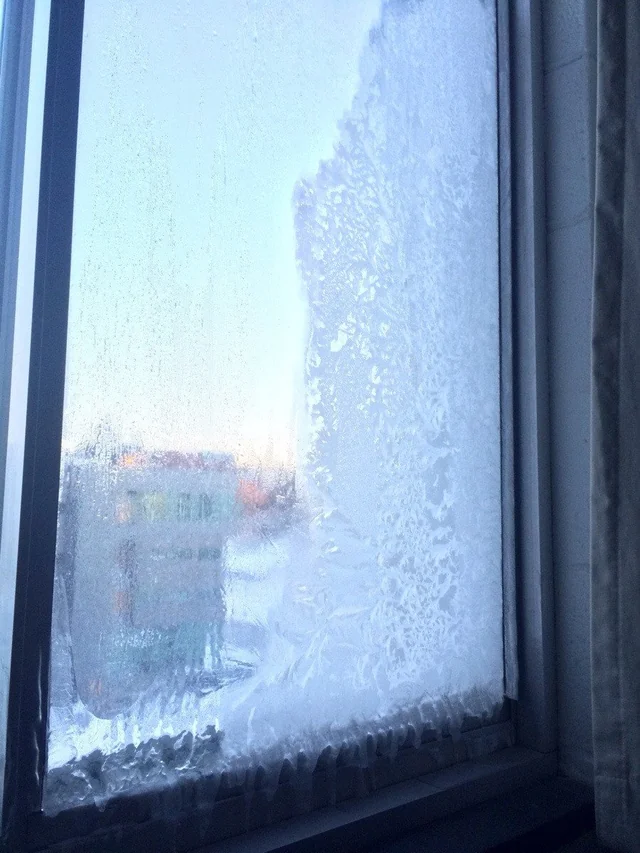
Why the frost pattern matters
One careful comparison is worth more than a generic product claim. Condensation and frost are related but not interchangeable with a failed seal. Room-side frost is accessible and responds to humidity, airflow, and temperature. Moisture trapped inside a sealed insulating glass cavity persists in different weather and points toward glass-unit service.
Humidity readings answer only part of the question. Health Canada’s broad 30-to-50-percent guidance sits beside a practical cold-weather qualifier: reduce indoor moisture when condensation develops. The correct response therefore depends on temperature, air movement, ventilation, and the thermal performance of the complete window.
Evidence to collect:
- High humidity across the home.
- Between-pane fog or glass residue.
- Draft at a sash or perimeter joint.
- Wet drywall or staining beside the opening.
Within the diagnostic path for Ice Buildup on Windows: Which Professional Should You Call?, use location and timing to distinguish preventing frost on indoor windows from between-pane moisture, uncontrolled air leakage, or a room-specific airflow problem.
Practical response:
- Collect photos, humidity, temperature, and weather notes.
- State whether moisture is accessible or between panes.
- 3List operation, lock, and draft symptoms.
- Check warranty and installation records.
- Request a written diagnosis and scoped remedy.

Example
Illustrative scenario: every upstairs window frosts and bathroom humidity stays high, but one living-room unit also has permanent between-pane haze. The home may need ventilation correction and a separate IGU service call rather than one blanket solution.
What not to assume
Do not ask one trade to solve every moisture symptom. A glass replacement cannot balance an HRV, and a dehumidifier cannot repair a failed seal or missing rough-opening insulation.
When professional help makes sense
Escalate promptly when meltwater reaches electrical components, materials remain wet, extensive mould is present, glass is cracked, or the opening is unsafe to operate. For a review centred on Ice Buildup on Windows: Which Professional Should You Call?, bring photos and measurements plus the reference steps for ice inside double-glazed windows; the visit can then begin with evidence rather than a generic replacement assumption.
Frequently asked questions
Who tests indoor humidity and ventilation?
An HVAC or ventilation professional can measure airflow and system operation; an energy advisor may assess the house as a system.
Who handles moisture between panes?
A glazier, manufacturer service team, or qualified window provider can assess the IGU and warranty path.
Who checks the wall around the window?
A building-envelope professional or experienced renovation contractor can investigate perimeter insulation, flashing, and concealed moisture.
Suggested internal links
Durable Windows Guide
Choosing and Installing Windows
Authoritative sources
Natural Resources Canada – Condensation
Health Canada – Ventilation and the indoor environment
Health Canada – Guide to addressing moisture and mould indoors